2026-05-15
Solid wood shutters have a long history for good reason. The Shutters Material has a warmth and density that synthetic alternatives struggle to replicate — the weight of a solid wood louvre, the way it absorbs paint, the slight natural variation in grain from panel to panel. For many homeowners, particularly in period properties, solid wood simply looks right in a way that composite materials don't.
The limitation of solid wood is moisture. Wood moves with changes in humidity. In rooms that stay relatively stable — living rooms, bedrooms, studies — this isn't a significant issue. In bathrooms, kitchens, and any room with wide temperature swings, solid wood shutters can warp, bow, or cause louvres to stick over time. That's not a defect — it's just how wood behaves, and it's why the material question matters so much by room.
MDF (medium-density fibreboard) shutters don't generate much excitement, but they solve the moisture problem that solid wood can't. MDF is dimensionally stable — it doesn't expand and contract in the way timber does — which makes it a genuinely sensible choice for bathrooms and kitchens where steam and humidity are a regular part of daily life.
Composite shutters sit somewhere between solid wood and MDF. They typically combine a wood-based core with a polymer outer layer or wrapping, giving them better moisture resistance than pure timber while retaining a slightly more natural feel than full MDF. For high-humidity rooms where you still want something that doesn't feel entirely synthetic, composite is worth considering.
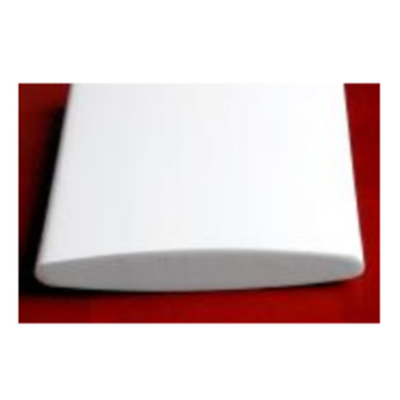
Vinyl and PVC shutters are the material choice that divides opinion. Some dismiss them as cheap-looking; others point out that they're genuinely waterproof, easy to clean, and hold up in conditions that would damage any wood-based shutter.
The honest answer is that quality varies significantly within the PVC shutter category. Lower-end vinyl shutters can feel noticeably hollow, flex more than they should, and yellow in direct sunlight over time. Higher-specification PVC shutters — particularly those with foam or solid cores — perform considerably better and, in the right context, are hard to distinguish from painted wood at a casual glance.
Where PVC shutters genuinely earn their place is in wet rooms, conservatories, and coastal properties where salt air accelerates the deterioration of any timber product. In those environments, the material durability of PVC is a practical advantage rather than a compromise.
It does, and this is a detail worth knowing before you buy. Solid wood louvres, when well made, have a firm and satisfying action — they hold their position reliably and tilt smoothly. The density of the material contributes to this feel in a way that's difficult to describe but immediately noticeable when you handle a quality solid wood shutter.
MDF louvres can achieve a similar result when the construction is solid, but lighter or hollow louvres — common in budget PVC ranges — tend to feel loose and imprecise. If you're the kind of person who adjusts louvres frequently to manage light through the day, material quality will affect how satisfying that daily interaction feels. It sounds like a small thing. Over years of use, it isn't.
Recommended Products
Let's Start The Project Together!
Contact Information
No.6 Jianlan Road, Lanxi Economic Zone, Lanxi City, Zhejiang Province, China
+86-15958416076
+86-0579-88293800
+86-0579-88893800
Mobile




 Deutsch
 عربى
عربى